
Yudit
A historical flash fiction

Hello! Thank you for stopping by Naptime Novelist! To learn more about what kinds of stories you’ll find here, you can visit my Guidebook.
If you’re interested in reading some of my writings in print form, you can find them at this page:
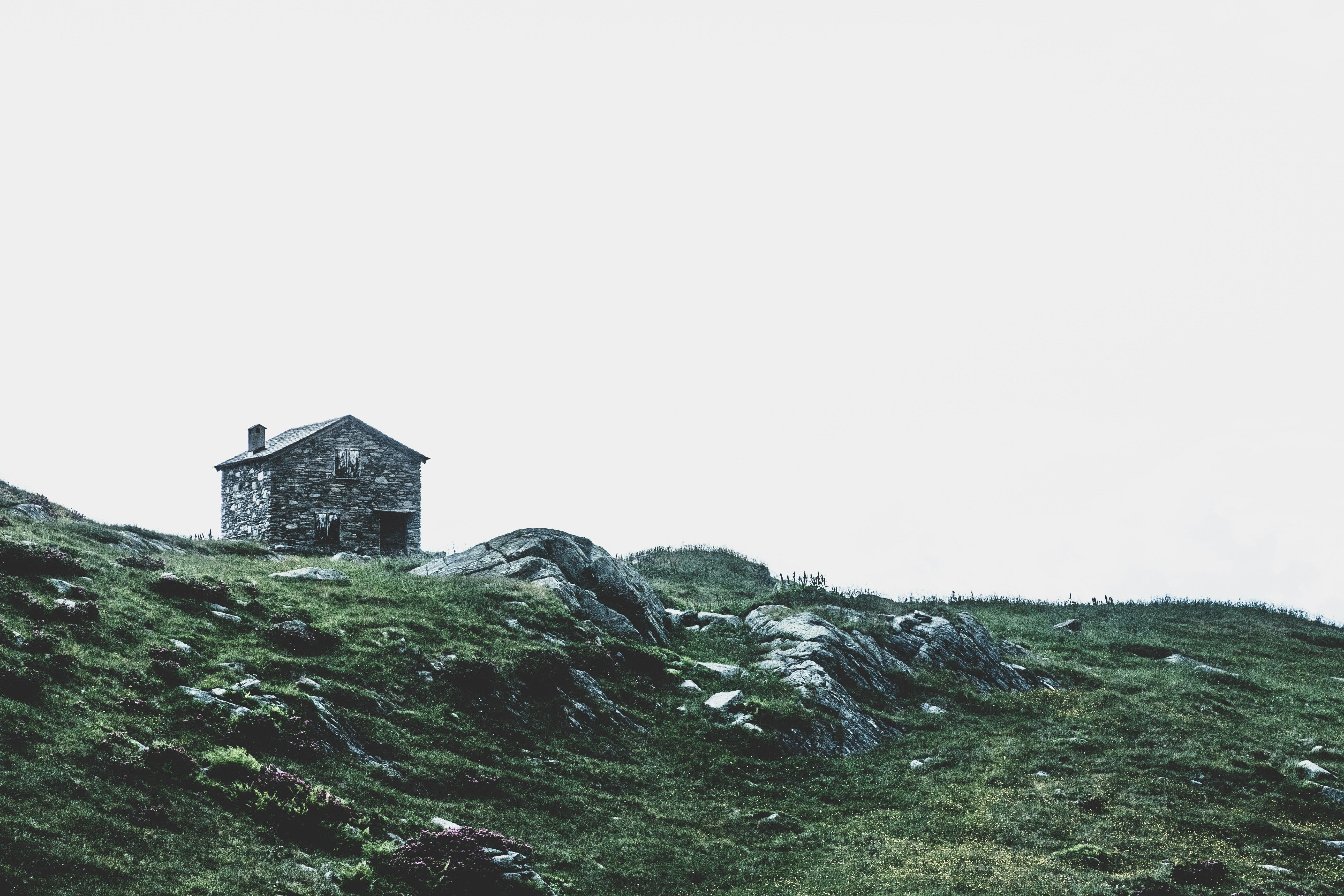
The general might slaughter a widow, but he would never turn away a whore. He would welcome me.
The Ottoman soldiers in their blood-red hats buried smirks as the great general opened the flap of his tent and looked down at me, the trespasser they’d escorted straight to him.
A soldier nudged me with his rifle. “She says she has information for you, general.”
The general squinted at me, from the shock of my uncovered black hair to the fine embroidery swirling in reds, greens, and blues over my dress. My wedding finery.
“You would betray your village?” he said.
“If it please the general,” I said, bowing my head. “The Russians have left us undefended. At the sight of your forces, they fled. My people are too stiff-necked to make peace with you, and I have no wish to die alongside fools.”
“Then you should hope that I will find your information worthy of my time.”
From my mountain village, I had watched the smoke plume from the remains of Stara Zagora on the horizon, had heard the ghost whispers of dying wails on the wind. And now the general had set his sights on the mountain and the little town nestled in its arms. I would not perish in helplessness like the peasants of the valley.
“There is a back way into the village,” I said, “a pass through the mountains, by which your contingent could take the village by surprise, before the villagers can raise a defense.”
When the general smiled, his teeth were stained purple with wine. “I don’t suppose there will be a posse of farmers hiding in the rocks to shoot at us as we come to the mountain pass?”
“I came hoping only that you would let me live.” I bowed my head. “General.”
My skin prickled as again the general’s eyes scraped from the top of my head, over the protective shell of my clothes to my feet, and back up. He beckoned me inside but did not move, so that my body brushed against his as I entered the tent.
There was no summer-green grass, no mud inside the general’s tent. Rugs lay thick upon the ground, dizzying in their colors and sharp patterns, with more grandeur in his battle tent than in the finest home in my village.
Reclining on a long cushion, the general flicked his hand at the floor beside him, and I laid down my traveling bag and sat. Beyond the main room of the tent, through a slit in a curtain, I could see the bedroom, where a thick mattress and silk sheets lay ready to protect the illustrious general from the uneven ground.
Catching the direction of my gaze, the general again showed his teeth, streaked like the last hazy amethyst glow of sunset.
“Tonight you tell me about this mountain pass.” He picked up his goblet, half-empty, and held it out to an attendant. When the general nodded in my direction, another servant appeared, holding out a brimming cup to me. “In the morning, we will find this village.”
Bowing my head again, at which the general’s smile plumped like a preening bird, I accepted the cup from the servant’s hands.
More than a bedfellow, the general desired an audience, a listening, adoring ear. I listened in awe to his recounting: the peasants burned alive in their homes, the fleeing women and children shot to death on the banks of the Bedechka River. At first, he said, he thought that it was the peasants who had fired on his troops. But when he realized that it was the Russian soldiers who had shot at the general’s forces and then fled in fear of his greater numbers, he did not reconsider his reprisal. My words were meek amazement at his cleverness, at the crushing fist of his forces. His cheeks flushing, he dismissed the servants, and we were alone.
He drank deeply, and I sipped.
“What other generals would brave the screams,” he said, his words running together. “The screams that linger in the wind, that soak into the ground?”
He hiccupped, his blinks lengthening. His musings turned toward the Sultan, and, like so many powerful men, a desperate, straining insecurity peeked through his boasts. Draining his cup, he reclined further, and his head dipped onto the cushion.
I sat quietly, watching his eyelids droop shut, listening as his heavy breaths turned to snores. His red hat slipped from his head and rolled along the carpeted ground, and his beard was dribbled with purple.
The army was complacent, restful, well-fed. When the camp held only the whispering night breeze and the sleepy stomp of horses, at last I reached for my traveling bag.
Grasping the old wooden handle, I retrieved my dead husband’s axe. Built to free timber from its stump, it was heavy in my unpracticed hands.
The general didn’t wake when I seized his graying hair and exposed his neck. He didn’t wake when I raised the axe in both of my shaking hands.
He didn’t wake when I brought it down with a slice and a crack, and his head followed his hat down to the soft, carpeted ground.
When I crept from the quiet camp, at every step I was certain that I would be stopped, questioned, attacked, shot, murdered. But my steps were blessed, in spite or perhaps because of the burden I carried. The soldiers slept or drank and laughed, none the wiser.
Though I had done all I could to stem the flow, my traveling bag began to seep as I climbed up the mountain, its crags lit only by the dim, milky light before dawn.
When at last I crested the mountain pass, the creamy mud-brick walls of the jumbled houses glowed in a faint echo of the moon. I had done it – survived the camp and the long, rocky road, with my sack seeping dark red and thumping against my hip.
At a clatter of loose pebbles beside the path, I froze. A shadow crept from the darkness, then took shape into the blacksmith’s son, clutching an old gun as thin and unreliable as his fast-sprouting limbs.
“It’s Yudit.” I raised my hands, holding the sack out toward him. “I’ve returned.”
The boy’s gasp carried through the dawn quiet, and he took a hesitant step toward me. When I opened the mouth of the bag, he peered inside, his eyes wide and white as a frightened horse.
Faint footsteps pattered toward us from the village as attentive ears came to investigate.
Then a new noise came, drifting up from the valley. Metal clashed, horses whinnied. Distant shouts rose like ghost whispers on the wind, brutality iced over with fear.
So they had found him.
As the sun peeked above the mountains in ribbons like a broken, golden yolk, I slipped to the ridge overlooking the valley and peeked over, keeping my body hidden behind a gnarled tree. The blacksmith’s son followed, the gun still tucked at his shoulder.
Yesterday the stolid, immovable Ottoman army had camped in our valley, resting and feasting before the attack. With the rise of the sun, a frightened cohort of red-hatted soldiers scurried in directionless panic between the opulent tents, and a new shape approached over the rolling hills: a wave of black hats and gray coats, thick as a creeping fog.
The Imperial Russian Army, returning at their convenience, though the ruins of Stara Zagora still smoked, trails of black reaching upward like departing souls.
Soft footfalls came from behind me, and when I turned, the men of the village, and some of the women, stood armed with guns and knives, pitchforks and scythes, now held in loose hands as they watched the cloud of gray swarm the distracted, red-hatted Ottomans.
Swinging my arm, I tossed my sack onto the summer-green grass, and the head of the great general rolled free.
As one, the village stared.
The town parted for me like the sea as I made my way up the dirt road that turned to a stone street, winding along the natural slopes of the cradled mountain ridge. My home, empty and still echoing with lost words and laughter, stood where the village met the wilderness.
Gathering logs and kindling from the woodpile, I went into the dark, lit a fire in the hearth. With the last crust of bread, I rolled up my sleeves to make breakfast.
Thank you so much for stopping by Naptime Novelist and for graciously making time to read my fiction! If you enjoyed “Yudit,” please feel free to like, comment, and/or restack to help other people find this little story!
Today’s flash fiction was inspired by an invitation from Keith Long to adapt a Biblical story into a different genre. In “Yudit,” I took the Book of Judith1 as my inspiration and set the story in 1870s Bulgaria during the Russo-Turkish War. The war was very brutal, with atrocities on both sides, but the Russian Army had a bad habit of camping in or near Bulgarian towns and then fleeing when the Ottoman forces were more numerous than expected, leaving the Bulgarian civilians unprotected. In the Battle of Stara Zagora, mentioned in the story, historians estimate that 14,000-15,000 civilians were killed by Ottoman forces after the Russian army retreated.
If you enjoyed “Yudit,” you might also enjoy my serial novella “The Scepter,” a 1930s noir retelling of the Book of Esther:

And here’s “Plunder of Zadar,” a historical flash fiction set in 13th century Croatia:

Tune in in 2 weeks for more short fiction, and, as always, thank you for choosing to spend your time here!

For some denominations, the Book of Judith is included in the Apocrypha.
My mind went straight to Jael (do not pass go, do not collect $200). Joining Michael in needing to read Judith. In the Apocrypha?
Great job with this one Bridget. Enjoyed it. Well done. - Jim